

A featured contribution from Leadership Perspectives: a curated forum reserved for leaders nominated by our subscribers and vetted by the Construction Tech Review Advisory Board.

Lloyd’s Register
Realising the Return on IoT investment with Average Revenue Per Sensor
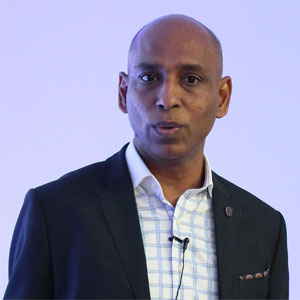
Jeevarathinam Ravikumar
The momentum for IoT or IIoT has been ramping up in the past few years but monetizing IoT involves multiple stakeholders in the solution value chain. Most of the Digital Transformation strategies include IoT implementation as one of the major initiatives but the challenges still remain in maximizing the return on IoT investment. Varying perspectives on recognizing IoT investment either as capital expenses (CapEx) and/or operating expenses (Opex) with challenges in convincing the value proposition is delaying the decision making by the CFOs. Introducing a new term here, IoT investments require a convincing business models detailing the ARPSIOT scaling from a pilot stage to full blown production stage. ARPSIOT for a specific solution can be derived from the net return that includes the cost savings plus the revenue growth after taking into consideration of all the costs (Opex plus CapEx) of implementing and maintaining over the estimated duration divided by the total number of sensors in the solution. There is no one-size-fits-all IoT solution or application, well thought business model need to be developed depending on the industry verticals and the environment. Scope for IoT application and implementation is increasingly taking the centre stage of business transformation initiative coupled with digital transformation.
Deciding on CapEx and/or Opex depends on the need of the organisation whether IoT is to be implemented for running multiple applications, keeping in mind with mid- to long-term objective or a specific application for a specific use case. First step is to be very clear on the use cases for which IoT needs to be implemented. Once the use case is fully convinced with the derived value proposition including cost savings and revenue growth, second step is to estimate the cost of investment to arrive at the net return on IoT investment. Complexity in estimating the cost of investment increases with the scope and scale of implementation. Multiple technology options add to the complexity in deriving the right cost as there is no defacto standard is available especially for sensors and connectivity.
Cost of the IoT building blocks depends on the following and it also helps to more accurately estimate the cost of investment so as to derive the ARPS
• Sensors including Sensor area network
• Connectivity
• Platform
• Security
• Application development
• Device Management
Deciding on CapEx and/or Opex depends on the need of the organisation whether IoT is to be implemented for running multiple applications, keeping in mind with mid- to long-term objective or a specific application for a specific use case
Type of sensors for a particular application or a solution can be decided by the measurement of interest (temperature, pressure, vibration, gas, etc.); another factor to consider is sensor communication protocols or standard—BLE, Z wave, Zigbee, WiFi, proprietary, etc. Other two major attributes to consider are length of battery life in case of battery enabled sensors and the stringent requirements on calibration and availability. Requirement of edge analytics can also add to the cost. Connectivity is again a complex deciding factor which depends on the availability on site and the cost can be highly impacted on the usage, capacity, bandwidth, real-time needs, latency etc. Wide area connectivity can be WiFi, Cellular, Sigfox, LoRA, Satellite, Ethernet, proprietary etc. Redundancy requirement on the connectivity can also result in increased cost.
Platform is a major decision which depends on the scalability, security and the organisation’s long term needs. Hence the options can be AWS, Azure, IBM, Oracle, Thingworx or any other application specific or customised/in-house platforms etc. Security is again a very subjective decision and it can add cost based on the stringent needs on security hardening from sensors to the application. Device management can be part of the platform features but it can impact the cost depending on how remote and the environment in which the sensors/edge devices are in operation. Sensors in mission critical applications need to be validated for their accuracy, all time availability, environment ruggedness and the life. Application development cost depends on the UX (user experience) as well as the access requirements from various devices such as laptop, mobile, tablet, etc and also depends on multi tenancy, storage needs, API flexibility etc.
Keeping the above cost considerations in mind, the use case has to be strengthened with the value proposition and the duration to recover the cost. ARPSIOT calculations can go wrong if any one of the above factor is mis-assumed or wrongly estimated. Replacing a battery in a remote asset or even replacing an obsolete connectivity standard to an available standard can be very costly. For example, replacing or calibrating any sensor or edge device in an oil well or an offshore windmill can completely change the initial cost of investment and can make the initial positive ARPSIOT to a negative contributor. GSM/GPRS connectivity in most of the countries are becoming obsolete and cost of replacement of the gateway or replacing the connectivity module can have a serious impact over the cost recovery or return on investment. Hence IoT investment is not a quick fix but at least a mid-term if not a long term objective/investment.
Leveraging the open-source, use of crowd sourced applications and exploring AI to power the IoT can help increasing the ARPSIOT in mid to long term. Convergence of computing, connectivity and cognitivity will accelerate in defining the complex use cases and reduce the cost of investment resulting in improving the ARPSIOT. IoT is becoming a growth accelerator and the growth opportunities are ever increasing as the use of IoT is not only enriching human lives but also associating more and more things to human lives to be Internet of Human and Things, IoHT.
IoT is helping to make the world safer in monitoring and maintaining the assets located in very remote areas where the safety of human living is challenged and also helping to achieve zero carbon emission objectives. McKinsey, July 2019 article states “Maturing underlying technologies will make Internet of Things technologies easier to implement and help companies and investors seize new opportunities”. Latest IDC report forecasts 79.4 zetabytes of data will be generated from 41.6 billion connected devices by 2025. Hence monetizing the IoT is real with the right decision on the cost of IoT investment to maximize the ARPS.
