











Designing Business Models for IoT
Cheng Jang Thye, Chief Architect & Head, Digital eXperience Center, Fujitsu Singapore

Cheng Jang Thye, Chief Architect & Head, Digital eXperience Center, Fujitsu Singapore
IoT business models will no longer be a value proposition, but a basic requirement
 Automating decision making
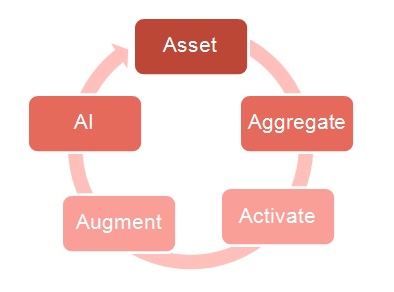
The next step is to replace human decision making with artificial intelligence. We may augment the sensor data and gather more inputs, and add more processing for the data. Whether this stage is possible would depend on policy and ethical considerations.
Building business models around the 5 stages
The initial Asset stage is essential to get things going and fortunately, the technologies in sensor hardware, network connectivity and cloud capacity are well understood. Subscription packages in units of sensor deployments can serve as the base business model. Cloud application for analyzing data can be built in cloud native fashion (i.e. scalable horizontally) and priced in terms of the value of visualizing the data from the sensors.
The next two stages, Aggregate and Activate provide improved operations over visibility. These stages are heavily dependent on software technologies, so further subscription upgrades could be packaged for the units deployed.
The AI stage is slightly tricky with its fair share of debate on ethical grounds. It is then important to understand the possibility and limits of AI. A computer can collect and analyze huge amount of data, and produces a statistically correct answer, humans cannot catch up with this speed. Humans learn from the communication and experience using our body and brain. It is thus imperative to combine the data analysis skill of AI with the creativity of human, where people can give common sense and an objective to AI.
Business leaders around the world are now keenly aware of the importance of digital transformation in enhancing business growth. IoT business models will no longer be a value proposition, but a basic requirement. However, digital transformation does not happen just by the adoption of new technology–design thinking, leadership, and co-creation with partners are crucial as well. Developing an organization culture that supports new transformation initiatives will also be integral for future business success.
Automating decision making
The next step is to replace human decision making with artificial intelligence. We may augment the sensor data and gather more inputs, and add more processing for the data. Whether this stage is possible would depend on policy and ethical considerations.
Building business models around the 5 stages
The initial Asset stage is essential to get things going and fortunately, the technologies in sensor hardware, network connectivity and cloud capacity are well understood. Subscription packages in units of sensor deployments can serve as the base business model. Cloud application for analyzing data can be built in cloud native fashion (i.e. scalable horizontally) and priced in terms of the value of visualizing the data from the sensors.
The next two stages, Aggregate and Activate provide improved operations over visibility. These stages are heavily dependent on software technologies, so further subscription upgrades could be packaged for the units deployed.
The AI stage is slightly tricky with its fair share of debate on ethical grounds. It is then important to understand the possibility and limits of AI. A computer can collect and analyze huge amount of data, and produces a statistically correct answer, humans cannot catch up with this speed. Humans learn from the communication and experience using our body and brain. It is thus imperative to combine the data analysis skill of AI with the creativity of human, where people can give common sense and an objective to AI.
Business leaders around the world are now keenly aware of the importance of digital transformation in enhancing business growth. IoT business models will no longer be a value proposition, but a basic requirement. However, digital transformation does not happen just by the adoption of new technology–design thinking, leadership, and co-creation with partners are crucial as well. Developing an organization culture that supports new transformation initiatives will also be integral for future business success.
